A used engine makes financial sense when a repair estimate, a blown head gasket that turned into a cracked block, an oil-starved 4-cylinder that spun a bearing, pushes past the vehicle's private-party value. For a…
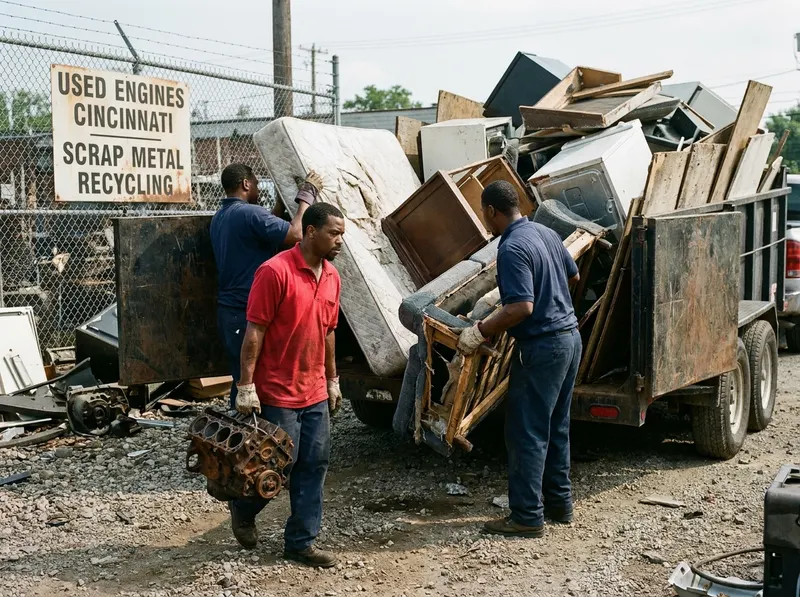
A used engine makes financial sense when a repair estimate, a blown head gasket that turned into a cracked block, an oil-starved 4-cylinder that spun a bearing, pushes past the vehicle's private-party value. For a Westwood resident driving a 2009 Silverado with 180,000 miles, a dealer crate engine at $3,500 plus labor rarely pencils out. A salvage-yard pull from a comparable low-mileage donor vehicle at $500, $900 often does. The trade-off is warranty coverage and documented history: a used engine carries a shorter coverage window than a reman unit, and mileage is estimated from the donor vehicle's odometer, not measured internally. That is a real limitation worth knowing before you commit.
Inventory at a Hamilton County salvage yard reflects the vehicles that actually crash, flood, or get traded off in this market. Over-the-Rhine and Avondale see a high turnover of older import sedans, Civics, Corollas, Accords, while Price Hill, Westwood, and the Norwood industrial corridor generate a steady stream of GM trucks and full-size vans. Oakley and Hyde Park tend to contribute newer crossovers and European makes. That local pattern matters because a common donor means more engine options, more mileage tiers to choose from, and faster pull times. Calling with your VIN lets the counter staff cross-reference fitment precisely, a 2.4L and a 2.5L from the same model year are not interchangeable, and catching that on the phone saves a wasted trip from Mount Lookout or Clifton.
The pull process runs in three steps. 1. Inventory check: the VIN and engine code are matched against current yard stock; if a direct match is not on hand, compatible donor vehicles are identified. 2. Pull and inspection: the engine is removed, visually inspected for cracked blocks, damaged mating surfaces, and obvious internal debris; compression is not bench-tested at a standard salvage pull, so a pre-install compression check by your mechanic is a reasonable precaution. 3. Pickup or delivery: most engines leave the yard on an engine stand or palletized; a Madisonville or Norwood shop can typically schedule a delivery run for larger orders. One non-obvious cost to factor in: a core charge of $50, $150 is common on certain engine families, ask about it upfront so the total is not a surprise at the counter. The quoted engine price and the core charge are two separate line items.
Every job gets a firm, written price after a free on-site visit.
Tell us about your used engines cincinnati job in Cincinnati and we'll send a clear, written quote, usually the same day.
 Junk Car Buyer Oakley